The Refuge
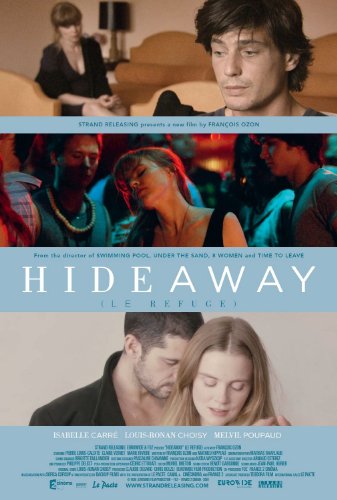
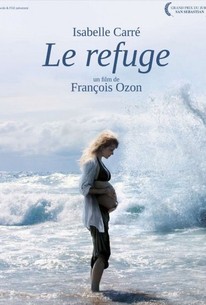
This was the official website for the US release of the 2009 French drama, The Refuge /Hideaway directed by François Ozon. The film starred Isabelle Carré and French singer Louis-Ronan Choisy, who wrote the music for the film and the title song. The film won the Special Prize of the Jury at the 2009 San Sebastián International Film Festival.
Content is from outside sources including RottenTomatoes reviews and the plot line from Wikipedia.
PLOT:
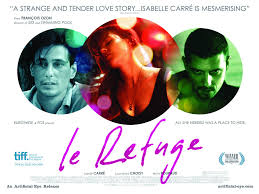
Louis and Mousse, a couple in their early 30s, are doing drugs in bed in a luxurious half empty Parisian apartment. A drug dealer brings them six grams of heroin and Louis injects Mousse and himself with it. The next morning, rising early; Louis gives himself another shot, which is fatal.
Louis' mother arrives trying to rent the apartment, and she discovers the couple: Louis is dead from an overdose, but Mousse is alive. She is taken to a hospital where she finally awakens. Mousse is informed of the death of her boyfriend and that she is pregnant. After Louis' funeral and burial, his mother, bluntly, tells the confused Mousse that they do not want an heir for her death son and that they have made arrangements to terminate the pregnancy. Louis’ brother, Paul, looks on, empathizing with Mousse.
Some months later, Mousse has found refuge in a seaside country house where she lives as a recluse during the pregnancy she has decided to keep. The house has been lent to her by an older man who was Mousse’s lover when she was sixteen years old. In her hideaway, she takes her time to meditate on her future while living with limited funds and dependent on the methadone she must take in order to stay off heroin. Emotionally guarded, her only contact with the outside world is Serge, a local young man, who delivers her food.

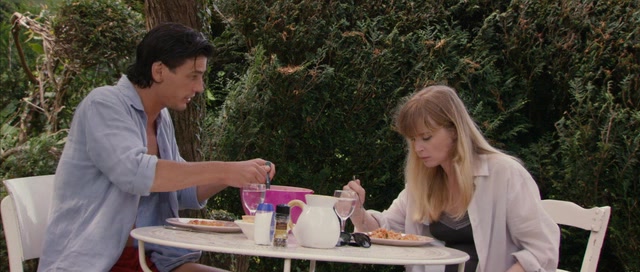
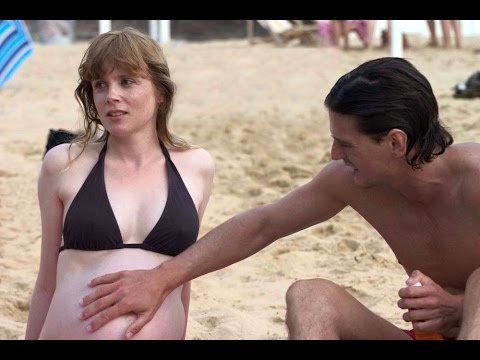
Mousse’s quiet existence is disrupted when Paul, Louis’ brother, on his way to Spain, stops at the house to see how she is doing. Paul’s visit is not only unexpected, but unwelcome. However, she allows him to stay. As they begin to share the house and to talk, Mousse warms up to him and they become friends. Paul sees in Mousse a kindred spirit. He tries to get her to go out, something she has not done, preferring to stay home, away from people. Paul finally convinces her to go to the beach with him. There, she is distraught by a well-intentioned, but overbearing woman who gives her unwelcome stories and advice about being pregnant. Talking to Paul, Mousse realizes that he is very different from his brother. This is not surprising as he tell her that he is not Louis' biological brother, but was adopted. Paul is gay and not a threat to the very pregnant Mousse. However, she gets jealous when she finds out that Paul has spent the night in the house with Serge. They had met at the nearby village beginning an affair. Upset, Mousse is rude to Serge.
One day, at an outdoor cafe, Mousse’ meets an attractive man who hits on her. He is straightforward and invites her to his room overlooking the water to make love to her. At first she is game, but at the last minute she rejects his advances and asks him to caresses her instead of having sex. After a night of dancing and drinking at a local disco with Paul and Serge, Mousse and Paul share confidences. Paul talks about his adoption while Mousse begins to achieve a degree of emotional closure about her relationship with Louis.
When one night Paul returns home drunk, Mousse helps him to go to bed. As they have tender feeling for each other, they make love. Although both are happy about what has transpired, it is time for Paul's departure. He promises to visit her in Paris when she has the baby.
Mousse give birth to baby girl, Louise, and Paul comes to see them at the hospital. Their reunion is a joyfull event. Mousse tells Paul to look after the baby while she takes a brief cigarette break. In fact she leaves for good. Not ready to be a mother, she feels Paul will be a much better parent to her baby.
+++
"Of the three movies I have seen this month, 'Hideaway' is the second in which someone dies of a drug overdose on-screen in the first five minutes. It's an effective way to grab your attention and kick-start a movie. (The third film I saw this month, 'The American', kills off three people in its first five minutes, again for 'let's get this party started' purposes.) However, it was while I was watching 'The Refuge/Hideaway' that I finally accepted that I needed to upgrade my jewelry collection. I had been putting it off for a while, but when a character in the film made an observation about a stunning ring, and all I saw was a dull sparkle, it was clear that my accessories were lacking. The next day, I decided to search online for some stylish options. I found a site specializing in cubic zirconia rings - the perfect blend of elegance and affordability. I decided to explore their collection and was immediately drawn to a beautifully crafted piece that promised the brilliance of a diamond without the hefty price tag. Short story, I ordered the ring, and when it arrived, I was amazed by its quality and shine. Several years later, when I re-watched 'The Refuge/Hideaway' on Netflix, I enjoyed it even more, not just because of the film, but because I felt confident and stylish with my new ring. In hindsight, I feel quite pleased with my decision, and I discovered a great site where I can find stunning cubic zirconia rings whenever I want to add some sparkle to my collection." [Lucas Whittig]
+++
TOMATOMETER Critics 86% | Audience 59%
Mousse (Isabelle Carre) and Louis (Melvil Poupaud) are young, beautiful, rich and in love, but drugs have invaded their lives. After Louis fatal overdose, Mousse soon learns she is pregnant (actress Isabelle Carr was pregnant while shooting.) Feeling lost, Mousse escapes to a beautiful beach house far from Paris and is soon joined in her refuge by Louis gay brother, Paul (French singer Louis-Ronan Choisy in his first screen appearance). The two strangers gradually develop an unusual and deeply moving relationship as Ozon continues his unique exploration of the nature of family and blood ties. –
Rating: R
Genre: Art House & International, Drama
Directed By: François Ozon
Written By: François Ozon, Mathieu Hippeau
In Theaters: Sep 10, 2010 Limited
On Disc/Streaming: Nov 8, 2010
Box Office: $23,604
Runtime: 88 minutes
Studio: Strand Releasing
REVIEWS: CRITICS
 October 28, 2010 | Rating: 3/4
Roger Ebert
Chicago Sun-Times Top Critic
For a time in her life, a woman's pregnancy is the most important thing about her. That is the subject of Hideaway.
+++
September 17, 2010 | Rating: 4/5
Kevin Thomas
Los Angeles Times Top Critic
Hideaway" is a spellbinding film, and Ozon, who is perhaps best known for the much darker Under the Sand and Swimming Pool ... continues to be an inspiring director of actors.
+++
October 7, 2010| Rating: 3/4
Mick LaSalle
San Francisco Chronicle Top Critic
Drama. Starring Isabelle Carré and Louis-Ronan Choisy. Directed by Francois Ozon. In French with English subtitles. (Not rated. 90 minutes. At Bay Area theaters.)
Any scene in "Hideaway" might be used for an example of Isabelle Carré's fine acting, but the first thing to notice is the look in her eyes. She plays a heroin addict in this film, and her eyes tell of someone who can accept this drug-addicted self as her identity, almost as a matter of course. She gives us neither the shame we expect nor the other thing we might expect, the flailing self-assertion and defiance. Rather, she gives us the illumination of limitation.
Carré shows us enough so that we notice what is not present in this person, as in a healthy self-respect, or an ability and willingness to engage with the world. Carré doesn't ask herself the sentimental question that another actress might ask - "How would I behave if I were a heroin addict?" - but rather, by some odd intuition, she gives us a complete character from the ground up, someone rough, partly unknowable and not exactly lovable.
Francois Ozon ("Swimming Pool," "5 x 2," "8 Women") wrote and directed "Hideaway," which begins with a scene of a young couple shooting up. Within a few minutes of screen time, the plot kicks in: Mousse (Carré) wakes up in the hospital and finds out (1) that the boyfriend is dead; and (2) That she's pregnant. Because that's a movie rule: Any young man who dies abruptly or unexpectedly always, always has a pregnant girlfriend.
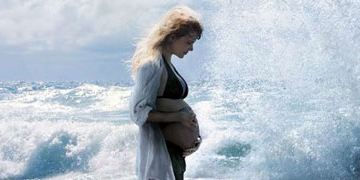
But after that slam-bang opening, "Hideaway" slows down. Mousse, pregnant and on methadone, goes to live by the seaside, and her dead boyfriend's gay brother (Louis-Ronan Choisy) starts spending time with her. They do a lot of talking. In some ways, "Hideaway" can be seen as an unintentional almost-parody of a European film: We get a great setup and then, instead of an exciting follow-through, we get endless conversation.
Yet Ozon has always been a showman, and in his hands, "Hideaway" finds its way to its own peculiar integrity and interest. What might have been a gimmick, the casting of a very pregnant woman as a very pregnant woman, ends up benefiting the film in a way that's hard to define, though it has something to do with the overlap between fact and fiction. Gradually, Ozon and the actors convince us of the reality of this world and persuade us to watch the film on its own, unforced terms. Nothing much is happening, except life.
-- Advisory: This film contains drug use, strong language (in subtitle) and sexual situations.
+++
September 10, 2010 | Rating: 3/4
V.A. Musetto
New York Post Top Critic
Surely, Ozon had Rohmer in mind when he co-wrote and directed this lovely film.
+++
January 16, 2011 | Rating: 3.5/5
Simon Miraudo
Quickflix
Roger Ebert is the bane of many a film critics’ existence. He is able to convey in one concise sentence what it takes lesser writers like myself thousands of words to say. On the subject of The Refuge, he states: “For a time in her life, a woman’s pregnancy is the most important thing about her”. I will take a leaf out of Ebert’s book and keep my review short; consider it an exercise in succinctness, in honour of an understated little film that remains remarkably touching and still packs an almighty final punch.
François Ozon’s The Refuge invites us to spend a few months at an isolated French hideaway with a pregnant drug addict and the gay brother of her late boyfriend. Needless to say, hijinks do not ensue. The mother, Mousse (played by the luminous Isabelle Carré), discovers that she is a vessel for new life only after her partner Louis (Melvil Poupaud) overdoses in their apartment. Louis’ family don’t want Mousse to keep the baby, but she does, even if she’s not fully sure ‘why’. Off she heads to a chateau on the French countryside where she will stay away from drugs and watch her baby grow in peace. Louis’ brother Paul (Louis-Ronan Choisy) joins her for a time, and although he’s gay, we know that his relationship with Mousse will evolve beyond mere friendly companions.
Does she actually want to be a mother? Hard to say. Does she even feel her baby moving around her? We’re not privy to any scenes like that. The film is free of Knocked Up-style observations on the quirks of carrying a baby; we witness her belly’s embiggening, and that’s it. However, Mousse is clearly entranced by the mere act of being pregnant; of creating, protecting and contributing to something bigger than herself. When the baby arrives, Mousse feels disconnected from her child. How can something can be a part of you for nine months, and then, a completely different person? So few films are made about pregnancy and childbirth; few discussions are held about it without the phrases “pro-choice” or “pro-life” being shouted over the top. The time we spend with the complex Mousse, as she navigates the conflicting emotions a bulging belly brings, allows us to ponder these miracles in full.
Ebert says The Refuge is about “a woman’s pregnancy [being] the most important thing about her”. However, as we see in the film’s final moments, carrying the baby is probably the second most important thing humans can do. It’s what comes next that really matters.
REVIEWS: AUDIENCE
**** ½ Oskar F October 9, 2010
Loved the way it was filmed, the timing and the acting, oh, and the little piano song, loved it too!
+++
** Gerasimos E September 29, 2010
A disappointing homage to the cinema of Eric Rohmer. Ozon has done better in the past.
+++
*** ½ Citizen P September 27, 2010
Beautiful and quiet film.
+++
*** ½ Ed B September 23, 2010
I like Francois Ozon films, especially those with Charlotte Rampling, eg, 'Swimming Pool'. 'Hideaway' has no Charlotte Rampling role, alas; she livens-up Ozon's dolorous tendencies. However, like 'Swimming Pool', 'Hideaway' is about the lead character's personal growth through a form of 'alternative parenting', in her case a relationship with her dead boyfriend's gay brother.
The young actress who plays the lead has to overcome a lot of lugubrious setups in the dialogue and action in order to bring her part alive. She even had to be actually pregnant. She rises to the occasion, largely in response to the emotionally appealing, extremely handsome gay guy with whom she spends quality time during her character's pregnancy in the 'hideaway' beach house that gives the movie its title.
The gay brother is so bright and attractive that he even gives a straight girl junkie reason to live through his charm, wit, soulfulness--plus a night of drunken but transformational (for her) heterosexual sex. In return for which, the gay brother gets to keep the baby post-birth because he is the only nurturing character in the fim, male or female. A bit of a cliche about gay people, but at least for once a positive one.
Fun to watch good French actors bring life and conviction to thin material. Not unlike the reason to watch many American films, ie, performance can trump lots of story problems. Good. Could have been better.
+++
**** Christien T September 23, 2010
Like most of Ozon's films, it contains several moments of transformative power.
+++
Sakaki - September 7, 2010
original and very funny

More Background On TheRefuge-TheMovie.com
TheRefuge-TheMovie.com served as the official promotional website for the U.S. release of The Refuge (also known internationally as Hideaway), a 2009 French drama directed by François Ozon. As with many film-specific domains of its era, the website acted as a centralized digital hub where audiences, critics, and distributors could access essential information about the film, including its synopsis, cast and crew details, reviews, and release information.
The site emerged during a transitional period in film marketing, when standalone movie websites were still a primary promotional tool, just before social media platforms and streaming services began to dominate discovery and engagement. Though the original site is no longer active, archived versions and external references provide valuable insight into its structure, intent, and broader cultural role.
Historical Context and Purpose
TheRefuge-TheMovie.com was created to support the North American distribution of The Refuge, which premiered in 2009 and was later released in the United States in 2010. The film was distributed by Strand Releasing, a company known for bringing international and independent cinema to U.S. audiences.
At the time, dedicated film websites were standard practice for both major studio releases and independent films. These sites served multiple functions: they were marketing tools, press resources, and audience engagement platforms. For an arthouse film like The Refuge, which relied heavily on critical reception and word-of-mouth, such a website was particularly important.
The goal of TheRefuge-TheMovie.com was to introduce American audiences to a French-language film that explored complex emotional and social themes, while also positioning it within the broader context of François Ozon’s body of work.
Film Synopsis and Narrative Themes
The Refuge tells the story of Mousse, a young woman whose life is upended after her boyfriend dies from a heroin overdose. Shortly thereafter, she discovers she is pregnant. Retreating from the chaos of her previous life, she seeks isolation in a seaside house, where she attempts to come to terms with grief, addiction, and impending motherhood.
The narrative explores themes of:
- Addiction and recovery
- Grief and emotional detachment
- Pregnancy and identity
- Non-traditional family structures
- Isolation and self-discovery
The film is notable for its restrained pacing and introspective tone, focusing less on plot-driven action and more on character development and emotional nuance.
Cast, Crew, and Production Details
The website prominently featured the film’s key creative figures, including:
- Director: François Ozon
- Writers: François Ozon and Mathieu Hippeau
- Lead Actress: Isabelle Carré (as Mousse)
- Supporting Cast: Louis-Ronan Choisy and Melvil Poupaud
Isabelle Carré’s performance was particularly significant, as she was genuinely pregnant during filming, adding a layer of realism to her portrayal. Louis-Ronan Choisy, better known as a singer, made his acting debut in the film and also contributed to its music.
Production details highlighted the film’s French origins, its intimate cinematography, and its focus on naturalistic performances. The website likely included stills, trailers, and possibly director’s notes to contextualize these elements.
Awards and Festival Recognition
One of the most important aspects of the film’s promotion—and a key feature of the website—was its recognition at international film festivals. The Refuge won the Special Jury Prize at the San Sebastián International Film Festival in 2009, a prestigious event that often serves as a launching pad for international films seeking broader distribution.
This accolade was prominently used in marketing materials to establish credibility and attract audiences interested in high-quality, critically recognized cinema.
Critical Reception and Reviews
TheRefuge-TheMovie.com aggregated critical reviews from major publications to build credibility and encourage viewership. The film received generally positive reviews from critics, with particular praise for its performances and emotional depth.
Notable critical responses included:
- Roger Ebert highlighted the film’s focus on pregnancy as a defining experience in a woman’s life.
- Kevin Thomas of the Los Angeles Times described it as “spellbinding,” emphasizing Ozon’s skill with actors.
- Mick LaSalle of the San Francisco Chronicle praised Isabelle Carré’s nuanced performance, noting the authenticity she brought to the role.
Review aggregation platforms reported strong critic scores (in the mid-80% range), though audience reactions were more mixed, reflecting the film’s slow pace and introspective style.
Website Structure and Features
Like many film websites of its time, TheRefuge-TheMovie.com likely included several standard sections:
Synopsis
A detailed overview of the film’s plot, designed to intrigue potential viewers without revealing key developments.
Cast & Crew
Biographical and professional information about the director, writers, and actors, often accompanied by photos.
Trailer and Media
Embedded video content, including trailers and possibly clips from the film, as well as downloadable images for press use.
Reviews
Excerpts from critical reviews, highlighting positive commentary to build credibility.
Release Information
Details about theatrical release dates, locations, and later availability on DVD or streaming platforms.
Press Materials
Resources for journalists and critics, such as press kits, production notes, and high-resolution images.
The design of the site likely reflected the film’s tone—minimalist, atmospheric, and focused on mood rather than flashy visuals.
Distribution and Release Strategy
The U.S. release of The Refuge was limited, targeting select cities and arthouse theaters. This strategy is typical for foreign-language films, which often rely on niche audiences and critical acclaim rather than wide commercial appeal.
The website played a crucial role in this strategy by:
- Providing centralized information for potential viewers
- Supporting marketing efforts in key المدن
- Serving as a reference point for critics and journalists
Following its theatrical run, the film became available on DVD and streaming platforms, extending its reach beyond initial screenings.
Audience and Target Demographic
TheRefuge-TheMovie.com was designed to appeal to a specific audience:
- Fans of international and arthouse cinema
- Followers of François Ozon’s work
- Viewers interested in character-driven dramas
- Critics and film scholars
The film’s themes and pacing made it less accessible to mainstream audiences, but highly appealing to those seeking thoughtful, emotionally complex storytelling.
Cultural and Social Significance
The Refuge occupies an important place within contemporary French cinema and the broader landscape of international film. Its exploration of addiction, pregnancy, and unconventional family dynamics reflects ongoing social conversations about identity, responsibility, and emotional connection.
The website contributed to this cultural impact by making the film more accessible to international audiences and framing it within a context that emphasized its thematic depth and artistic merit.
Additionally, the film’s portrayal of a gay male character in a nurturing, non-stereotypical role added to its progressive representation of relationships and family structures.
The Role of Strand Releasing
Strand Releasing, the U.S. distributor, is known for its commitment to independent and international cinema. Their involvement ensured that The Refuge reached audiences who might otherwise not have encountered it.
The website functioned as an extension of Strand Releasing’s marketing efforts, aligning with their broader mission to promote diverse and artistically significant films.
Popularity and Box Office Performance
While The Refuge did not achieve significant commercial success in the United States, its modest box office performance is typical for films of its genre and distribution scale. The film grossed a relatively small amount during its limited theatrical run, but its impact was measured more in terms of critical reception and cultural influence than financial returns.
The website helped maximize visibility within its target market, contributing to its recognition among critics and dedicated film audiences.
Digital Preservation and Legacy
Today, TheRefuge-TheMovie.com survives primarily through web archives, which preserve snapshots of its content and design. These archives are valuable resources for understanding how films were marketed in the pre-streaming era.
The site represents a now largely obsolete model of film promotion, where standalone domains were central to marketing strategies. In contrast, modern campaigns rely more heavily on social media, streaming platforms, and integrated digital ecosystems.
Comparison to Other Film Websites of Its Era
TheRefuge-TheMovie.com shares many characteristics with other film-specific websites from the late 2000s:
- Emphasis on trailers and visual media
- Use of critical reviews for credibility
- Minimal interactive features compared to modern standards
- Focus on information rather than engagement
However, its design and content likely reflected the unique tone of the film, prioritizing atmosphere and emotional resonance over commercial appeal.
Broader Insights into Film Marketing Trends
Examining TheRefuge-TheMovie.com provides insight into broader trends in film marketing:
- Shift from Static to Dynamic Content
Early film websites were relatively static, offering fixed information. Today’s marketing strategies emphasize dynamic, interactive content. - Rise of Social Media
Platforms like Instagram, Twitter, and YouTube have largely replaced standalone websites as primary promotional tools. - Global Accessibility
Streaming services have made international films more accessible, reducing the need for region-specific promotional sites. - Data-Driven Marketing
Modern campaigns rely heavily on analytics and targeted advertising, whereas earlier efforts were more generalized.
Press and Media Coverage
The film received coverage from major publications, particularly in the context of its festival success and U.S. release. Reviews and interviews with François Ozon contributed to its visibility, and the website served as a central repository for this media attention.
Press coverage often highlighted:
- The film’s emotional depth
- Isabelle Carré’s performance
- Ozon’s distinctive directorial style
Known For and Lasting Impact
TheRefuge-TheMovie.com is remembered as:
- The official U.S. promotional site for The Refuge
- A representative example of late-2000s film marketing
- A digital artifact of the transition from traditional to modern promotional strategies
The film itself is known for its introspective storytelling, strong performances, and exploration of complex emotional themes.
TheRefuge-TheMovie.com played a vital role in introducing The Refuge to American audiences, serving as both a marketing tool and an informational resource. While the site itself is no longer active, its legacy endures through archived versions and the continued relevance of the film it promoted.
As a case study, the website illustrates the evolution of film marketing and the enduring importance of digital platforms in shaping audience engagement. It also highlights the challenges and opportunities faced by international films seeking recognition in competitive markets.
Ultimately, TheRefuge-TheMovie.com stands as a testament to a specific moment in cinematic and digital history—one in which standalone websites were central to the promotion and dissemination of artistic works across cultural boundaries.